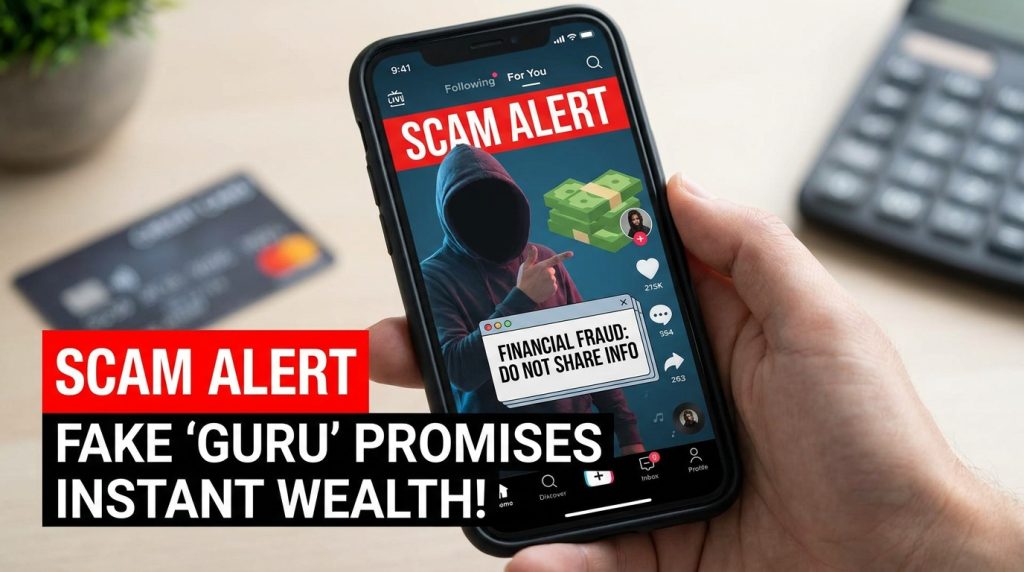
TikTok has turned financial content into a short video product. Some of it is useful. Some of it is harmless entertainment. Some of it is a sales funnel with music, captions and a broker link waiting at the end.
For traders and investors, the problem is not that financial content exists on TikTok. A short video can explain a term, introduce a market theme or point viewers toward further research. The problem is that trading is a difficult, high risk activity being squeezed into a format built for speed, certainty and repeat viewing. That format rewards confidence more than accuracy. It rewards clean claims more than risk warnings. It rewards the creator who says “this strategy prints” over the one who says “this depends on volatility, execution, spread, fees, risk tolerance and whether you can stop clicking when you are annoyed.”
That is not a small issue. Trading scams work best when the target acts quickly and checks slowly. TikTok is very good at making things feel immediate. A video shows a profit screenshot, a simple chart pattern, a funded account payout, an options win, a crypto call or a luxury lifestyle. The viewer is pushed to a private group, broker signup, paid course, copy trading account, signal room or fake platform. The scam may not happen in the video itself. The video is often just the doorway.
The BrokerListings TikTok trading content report is useful because it focuses on the quality and risk of finance related content on the platform. For traders comparing brokers and trading resources, the wider BrokerListings broker and trading information index can be used as one starting point, but any provider, account or platform promoted through social media still needs independent verification.
The main warning is simple. TikTok can introduce trading ideas. It should not decide where your money goes.
Why TikTok Trading Scams Work
TikTok trading scams work because they match the platform’s rhythm. Short videos remove friction. A creator can show a clean setup, a big number and a confident claim within seconds. The viewer does not see the losing trades, the risk per position, the account history, the deposit route, the withdrawal terms, the broker relationship or the affiliate payment behind the link.
Trading is already vulnerable to hindsight. It is easy to point at a chart after the move and explain why it was obvious. TikTok makes that easier. A creator can show a breakout after it happened, draw two lines, add a caption and imply repeatability. The viewer sees clarity. The market gave the creator a solved puzzle. Real trading gives the trader an unsolved one.
The SEC investor alert on social media and investment fraud warns that fraudsters use social media to lure investors into schemes including impersonation, crypto scams, romance scams and market manipulation. That warning applies neatly to TikTok because the platform can make a stranger feel familiar before any serious checks happen.
Scammers also use TikTok because trust can be borrowed. A profile with followers, comments and frequent posts can look established. A person speaking confidently into a camera can feel more credible than a text advert. A creator who replies to comments may feel accessible. None of this proves trading skill, regulatory permission or honest intent.
The psychology is straightforward. A viewer sees someone apparently earning money from trading. The video suggests the method is simple. The comments appear positive. The next step is easy. Join the group. Click the link. Message the mentor. Download the app. Deposit with the recommended broker. The viewer moves from curiosity to financial action before the boring checks begin.
Short form content also compresses risk. A proper trading explanation needs context. What is the market? What is the time frame? What is the entry logic? What invalidates the idea? What is the stop? What is the expected win rate? What is the average loss? What costs apply? How large can drawdowns become? What happens during news volatility? On TikTok, much of this is omitted because it slows the video down. Sadly, risk has poor danceability.
The FTC guidance on cryptocurrency scams notes that investment scams often promise large profits with little or no risk and frequently start on social media or dating platforms. Many TikTok trading scams follow that same structure. The product may be forex, crypto, options, funded accounts, binary style trades, copy trading or AI bots. The underlying pitch is still the same: easy money, fast action, low doubt.
The Finfluencer Problem In Trading Content
A finfluencer is a financial influencer. Some finfluencers provide useful education. Some explain basic terms, market history, behavioural mistakes or platform risks in a clear way. Others are paid promoters, poor traders, affiliate marketers, unlicensed advisers or outright scammers. The label itself tells you very little.
The problem becomes serious when entertainment turns into promotion. A person may present themselves as a trader, educator or mentor while earning most of their money from broker referrals, course sales, paid groups, prop firm links, token promotions or copy trading fees. That does not automatically make the content fraudulent. It does create conflicts of interest that viewers need to understand.
The UK regulator has been unusually direct on this issue. The FCA has warned firms and influencers that financial promotions on social media must be fair, clear and not misleading through its guidance on lawful social media financial promotions. The FCA has also taken action against illegal finfluencer promotions, including alerts and enforcement activity, as described in its crackdown on unlawful finfluencer activity.
This matters because trading content often behaves like a financial promotion even when the creator claims it is “not financial advice.” That phrase is not a magic spell. A video can still push a viewer toward a broker, strategy, token, signal group or paid product. A disclaimer does not make a misleading claim fair. It also does not make the viewer’s losses disappear, which is the more practical point.
Finfluencer content often blurs education and sales. A video may start by explaining a candlestick pattern or options setup. Then it moves into a “free” group, a broker link, a funded account code, or a mentorship offer. The viewer thinks they are learning. They may actually be entering a funnel.
Trading scams use this format because it gives the scammer cover. The public content looks educational. The real pressure begins in direct messages or private groups. That is where the viewer may be told to deposit with a specific broker, follow exact signals, invest in a managed account, buy a token before listing, or send crypto to activate a trading platform.
The risk is not only fraud. Bad trading education can still cause damage. Overconfident videos can make beginners believe trading is mostly about finding one pattern, one indicator or one “ICT style” entry. They may not learn position sizing, trade frequency, execution quality, tax implications, spreads, slippage, drawdowns or the difference between backtested examples and live decisions. The scammer does not even need to steal directly if the viewer is pushed into reckless trading. The market will handle the rest, with its usual customer service standards.
A trustworthy educator should be willing to discuss losses, limits, risk and conflicts. A risky finfluencer hides those points behind lifestyle footage, profit screenshots and vague claims about discipline. If the content makes trading look easy, fast and emotionally clean, it is probably leaving out the parts that matter.
Common TikTok Trading Scam Formats
The most common TikTok trading scam is the fake signal group. A creator posts short videos showing profitable trades, often in forex, crypto, gold, indices or options. Viewers are told to join a free Telegram or WhatsApp group. Inside the group, the operator posts trade calls and screenshots. The group may appear active, with members praising the results and sharing withdrawals.
The scam can work several ways. The group may push members to a fake broker that blocks withdrawals. It may front run trades in thin markets. It may charge for a premium tier that provides low quality signals. It may use fake screenshots to claim a high win rate. It may collect deposits for a managed account. The free group is not always the product. Sometimes it is the bait.
Another format is the fake account manager. The creator or someone pretending to work with them offers to trade for the viewer. The pitch is simple: send funds, and the expert will grow the account. The victim may see a dashboard showing profits, but the platform is controlled by the scammer. When withdrawal is requested, fees appear. Tax fee. Verification fee. Account upgrade. Liquidity release. Compliance payment. One more transfer. Then another.
A third format is the copy trading trap. Copy trading itself can be legitimate when offered by regulated firms with transparent performance data, risk controls and clear terms. On TikTok, however, copy trading is often sold as passive income. The viewer is told they can mirror an expert and avoid doing the hard work. The missing detail is that the “expert” may not have verified results, may be taking undisclosed referral income, may be using extreme leverage, or may be operating through an unsafe platform.
A fourth format is the funded account or prop firm exaggeration. Some proprietary trading challenges are real. Many traders use them. But TikTok content can distort the model by making payouts look easy and frequent. Scammers may impersonate firms, sell fake challenges, claim guaranteed passing methods, or charge for bots that supposedly pass evaluations. A video showing a payout is not proof that the average trader can repeat it, or that the promoted firm is legitimate.
A fifth format is the fake AI trading bot. The pitch is built for the current market mood. The bot supposedly trades forex, crypto, indices or options automatically. It has a high win rate, low risk and limited spots. The viewer deposits funds, connects an exchange, buys access, or sends crypto to activate the system. In many cases, there is no real bot. In others, there may be a weak strategy wrapped in aggressive marketing. Either way, “AI” should not be treated as a substitute for verification. A bad strategy with machine learning language is still a bad strategy. It just sounds more expensive.
A sixth format is the token pump. TikTok videos promote a small crypto project, presale or meme coin. The creator implies early buyers can make large gains. Viewers are pushed to buy quickly before listing or before the next “catalyst.” The insiders may sell into the demand, liquidity may be pulled, or the token may have contract features that disadvantage buyers. The viewer discovers too late that the exit was the product.
A seventh format is impersonation. A scammer copies a real trader, financial educator, broker or public figure and messages followers. The username may differ by one character. The profile photo may be stolen. The fake account offers private signals, account management, recovery help or exclusive access. The victim thinks they are dealing with someone trusted. They are not.
The FBI guidance on cryptocurrency investment fraud notes that scammers use social media to contact victims directly or indirectly through fake investment opportunities. TikTok is part of that wider pattern. The public video builds attention. The private chat completes the fraud.
Fake Brokers, Signal Groups And Copy Trading Traps
The broker link is where many TikTok trading scams turn into real losses. A creator may recommend a platform that looks professional, offers high leverage, accepts quick deposits, and appears to support the promoted strategy. The viewer sees a simple path: watch the content, join the group, open the broker account, follow the signals.
That path can hide several conflicts. The creator may receive affiliate payments for signups or deposits. The broker may be offshore or unregulated. The trading conditions may be poor. Withdrawals may be difficult. The platform may be a clone of a legitimate firm. The signals may be designed to encourage frequent trading rather than profitable trading.
The FCA Warning List is one tool UK traders can use to check whether a firm has been flagged as unauthorised. Traders in other countries should use their own regulator’s register and warning list. The check should be done before depositing, not after the platform asks for a withdrawal fee.
A common scam platform shows early profits. This matters because victims often say, “But I saw the trades winning.” On a fake platform, the dashboard is not evidence. The scammer can show any balance they want. A fake trading history is just numbers on a screen. The real test is whether the firm is regulated, whether the payment route matches the legal entity, and whether withdrawals operate under clear terms.
Signal groups can create the illusion of success through selective posting. Winning trades are highlighted. Losing trades are ignored, deleted or explained away. Screenshots arrive without full account statements. Risk per trade is unclear. The group may claim a 90 percent win rate without showing a verified record. This is not analysis. It is a highlight reel.
Copy trading creates similar issues. A trader may copy a provider without understanding the underlying risk. The provider may use martingale position sizing, average down heavily, trade during news, or hold large floating losses. The account may look smooth until it breaks. A short TikTok clip cannot show this. Proper performance review requires drawdown history, trade size, leverage, duration, closed and open positions, fees and the provider’s incentive structure.
The biggest warning sign is when the promoter discourages independent checking. If they say the broker is safe because “everyone uses it,” that is not verification. If they say questions show a bad mindset, that is not mentorship. If they insist deposits must be made through a private link or account manager, that is not convenience. It is control.
Traders should also be careful with “exclusive” broker offers. A bonus, spread discount or private link may come with hidden conditions. In some scam cases, bonus terms are used to block withdrawals until large turnover requirements are met. In worse cases, the bonus is just another excuse in a fake platform’s withdrawal script.
A legitimate trading provider should survive basic questions. What is the legal entity? Which regulator authorises it? What permissions does it hold? Where are client funds kept? What are the withdrawal terms? How is the creator paid? Are results independently verified? If the answers are vague, the risk is not vague. It is obvious.
Crypto And Payment Scams Promoted Through Short Form Content
Crypto scams fit TikTok because the stories are easy to compress. A coin is early. A wallet is growing. A bot is earning. A staking pool pays daily. A presale has limited space. A trader turned a small amount into a large amount. The video shows speed and possibility. It rarely shows custody risk, smart contract risk, liquidity risk, tax, slippage, scams, failed launches or the long list of people who bought the top and now call it “being early.”
The FTC’s warning on cryptocurrency scams says crypto is central to many investment scams because it can be both the supposed investment and the payment method. That is why traders should be cautious when a TikTok pitch leads to a wallet address, private exchange, fake mining site, liquidity pool or unknown trading app.
One common scam asks the victim to deposit crypto into a platform that shows profitable trades. The victim may start small. The platform shows gains. The scammer encourages a larger deposit. When withdrawal is requested, the platform asks for tax, gas, anti money laundering clearance, wallet verification or account activation. The fee must be paid separately. This is a familiar pattern, just with blockchain terms.
Another scam asks the victim to connect a wallet. The site may claim to offer staking, airdrops, token presales, copy trading or arbitrage. The victim signs a transaction or approval they do not understand. Assets are then drained. No legitimate trading mentor needs a seed phrase. No support agent needs full wallet control. No platform should be trusted because a TikTok video said the link was safe.
Short form content also hides payment risk. A bank transfer, card payment or regulated platform deposit may have some dispute routes. A crypto transfer to an unknown wallet is usually much harder to reverse. Scammers know this. They often push crypto payments because they reduce the chance of recovery.
The practical rule is simple. If a TikTok trading pitch moves you toward crypto payment, wallet connection or private exchange signup, slow down. Verify the firm, domain, contract, payment recipient and withdrawal route. A few minutes of excitement is not enough reason to send irreversible money.
Red Flags Before Following A TikTok Trading Pitch
The first red flag is a guaranteed or near guaranteed return. Trading does not work that way. A creator claiming daily profit, no risk, fixed weekly returns or a strategy that “cannot lose” is either lying, hiding risk or too inexperienced to understand the danger of the claim.
The second red flag is a high win rate with no verified record. A screenshot of ten trades is not proof. A proper record should show all trades, losses, position sizes, account equity, drawdowns, fees and time period. A creator who only shows wins is not proving skill. They are editing.
The third red flag is pressure to move into private messages. Education can happen in public. Fraud often needs privacy. Once the conversation moves to DMs, the scammer can apply pressure, offer special access, send payment details and avoid public scrutiny.
The fourth red flag is a broker or platform that cannot be verified through an official regulator. A website badge does not count. A license screenshot does not count. A real firm should appear on a regulator register with matching contact details, permissions and domain.
The fifth red flag is an unclear payment route. Money going to a personal account, unrelated company, crypto wallet or payment app should be treated as high risk. A serious broker should have a clear funding method linked to the legal entity.
The sixth red flag is lifestyle marketing. Cars, watches, hotel rooms, beaches and stacks of cash do not prove trading ability. They prove that the creator understands what gets attention. Sometimes the lifestyle is rented. Sometimes it is funded by selling courses to people who want the lifestyle. Either way, a watch is not a risk disclosure.
The seventh red flag is contempt for risk management. A creator who mocks stop losses, encourages oversized positions, promotes revenge trading or frames caution as weakness is not teaching trading. They are selling adrenaline.
The eighth red flag is “not financial advice” used as a shield after making direct claims. The phrase may reduce legal exposure in the creator’s mind, but it does not make the claim honest or useful.
The ninth red flag is withdrawal stories that depend on more payments. If a platform asks for tax or clearance fees before release, ask why the fee cannot be deducted from the balance. If the answer is unclear, assume the displayed balance may not be real.
The tenth red flag is recovery help from strangers. If someone contacts you after a loss and says they can recover funds for an upfront fee, treat it as a likely second scam.
How Traders Can Verify Claims Before Depositing Money
Verification begins with the promoter. Who are they? Are they licensed to give financial advice or promote financial products in the jurisdiction where viewers are located? Do they disclose affiliate relationships? Do they show losses? Do they provide verified performance? Do they explain risk clearly? A creator who cannot answer these points should not influence where money goes.
The next check is the broker or platform. Find the legal entity in the terms and client agreement. Search the relevant regulator’s official register. Compare the firm name, licence number, permissions, address, website, phone number and email. Similar details are not enough. Clone scams rely on similarity.
The third check is the product. Forex, CFDs, crypto derivatives, options, funded accounts, signals and copy trading all have different risks. A TikTok video may present them as simple income tools, but the trader needs to understand leverage, spreads, fees, slippage, margin, liquidation, tax and withdrawal rules.
The fourth check is the payment method. The recipient name should match the legal entity or an explained custodian or payment processor. Crypto deposits to private wallets, bank transfers to unrelated companies and payments through informal channels should be treated as serious warnings.
The fifth check is performance. A real strategy should be judged over a meaningful sample, including losing periods. Profit screenshots are not enough. Viewers should look for audited statements, broker verified records, full equity curves, drawdown data and clear assumptions. Even then, past performance does not guarantee future results. Boring sentence. Correct sentence.
The sixth check is incentives. How does the promoter make money? Course sales, broker referrals, subscription fees, copy trading fees, spread sharing, token allocations and prop firm affiliate payments can all influence content. Disclosure does not automatically make the offer safe, but non disclosure is worse.
The seventh check is withdrawal terms. Before depositing with any platform promoted on TikTok, read the withdrawal rules. Look for fees, processing times, identity checks, bonus restrictions, account tiers and reasons withdrawals may be delayed. A trader who skips withdrawal terms is trusting the platform with the most important part of the trade: getting money back.
The final check is time. Scams hate delay. Real opportunities can usually survive a night of research. If the promoter says the offer dies unless you deposit immediately, let it die. Markets will open again. Your capital may not.
What To Do After Suspected Fraud
Stop sending money immediately. Do not pay release fees, tax fees, verification fees, wallet activation fees or recovery charges. Scammers often keep victims paying by claiming the next transfer will unlock the account. That is usually the trap continuing.
Save evidence. Take screenshots of TikTok profiles, videos, comments, direct messages, group chats, broker pages, account dashboards, payment instructions, wallet addresses, transaction IDs, emails and phone numbers. Fraud accounts can disappear quickly.
Contact the bank, card provider, exchange or payment service used. Ask whether the payment can be stopped, disputed, recalled, frozen or flagged. Crypto recovery is harder, but fast reporting can still matter if funds touch a known exchange.
Report the scam through official routes. U.S. victims can report internet enabled fraud through the FBI Internet Crime Complaint Center, securities complaints through the SEC complaint process, and consumer fraud through the FTC fraud reporting portal. UK victims can report unauthorised firms through the FCA scam reporting page and fraud through Report Fraud.
Be wary of anyone offering guaranteed recovery. A second scam often follows the first. Anyone asking for upfront fees, seed phrases, wallet access or secrecy from authorities should be avoided.
Final Warning
TikTok trading scams work because they make financial decisions feel quick, social and simple. A video can make a risky product look clean. A creator can make a fake broker look normal. A private group can make weak evidence feel strong.
Finfluencers are not all scammers. TikTok is not useless for financial education. But trading content on the platform should be treated as marketing until proven otherwise.
A real broker can be verified. A real strategy can discuss losses. A real educator can explain risk. A real withdrawal process does not require endless new payments.
Use TikTok for ideas if you like. Do not use it as proof. Before depositing money, check the firm, the payment route, the promoter’s incentives and the withdrawal terms. The best scam filter is still boring research done before the link gets clicked.